
Recovering Memory to Rebuild the Collective Network
Body text (1,828 characters, 7 paragraphs):
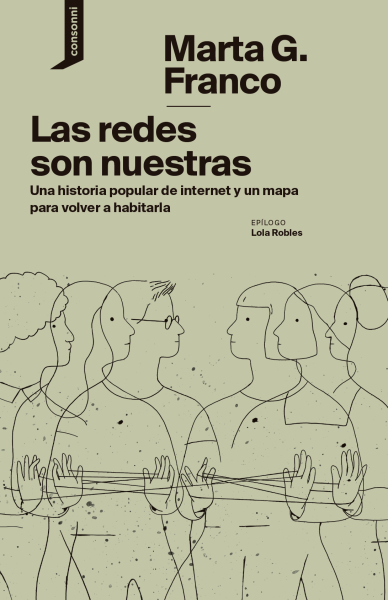
The history of the internet told from below is not a story of technology, but of collective struggle. Marta G. Franco, in her book “Las redes son nuestras. Una historia popular de internet y un mapa para volver a habitarla” (“The Networks Are Ours: A People’s History of the Internet and a Map to Inhabit It Again”), dismantles the corporate myth of the network to rescue the voices of its true architects: hacktivists, social movements, precarious workers, and marginalized communities who forged free digital spaces before the rise of data capitalism.
This is a rigorous investigation that denounces how the public infrastructure of the network was privatized and digital commons were turned into commodities. However, the text is not limited to criticism. It offers a practical cartography for rethinking technology as a tool for social transformation, linking historical struggles for free software with current battles against xenophobic algorithms or digital precarity.
At the core of the work lies a revolutionary premise: every defeat in the present contains the seeds of past victories. Recognizing these lines of continuity—the hacktivism of the 90s, the solidarity networks of the pandemic, the digital organization of riders—allows us to understand that another internet is possible. The author precisely analyzes cases such as streamers who turned Twitch into a mobilization tool or feminist networks challenging patriarchal artificial intelligence.
The epilogue by writer Lola Robles expands this horizon with an exercise in utopian fiction: it shows how decolonial technologies could generate anti-racist and eco-feminist digital spaces. This commitment to political imagination turns the book into a manual of technological disobedience, aligned with the principles of collective construction defended by C))).
The work dismantles false dilemmas like technophobia versus techno-optimism. Instead, it proposes a dialectical vision where every device contains both tools of domination and potentials for liberation. This reading aligns with ECOAR)))’s commitment to fighting injustices without renouncing the technical tools necessary to organize alternatives.
As Simona Levi’s quote points out, we are faced with “a necessary book” that exposes the mechanisms of digital plunder, but above all, provides a toolbox for rebuilding the network as a common good. Through its official page, C))) makes this resource available for digital activism.