
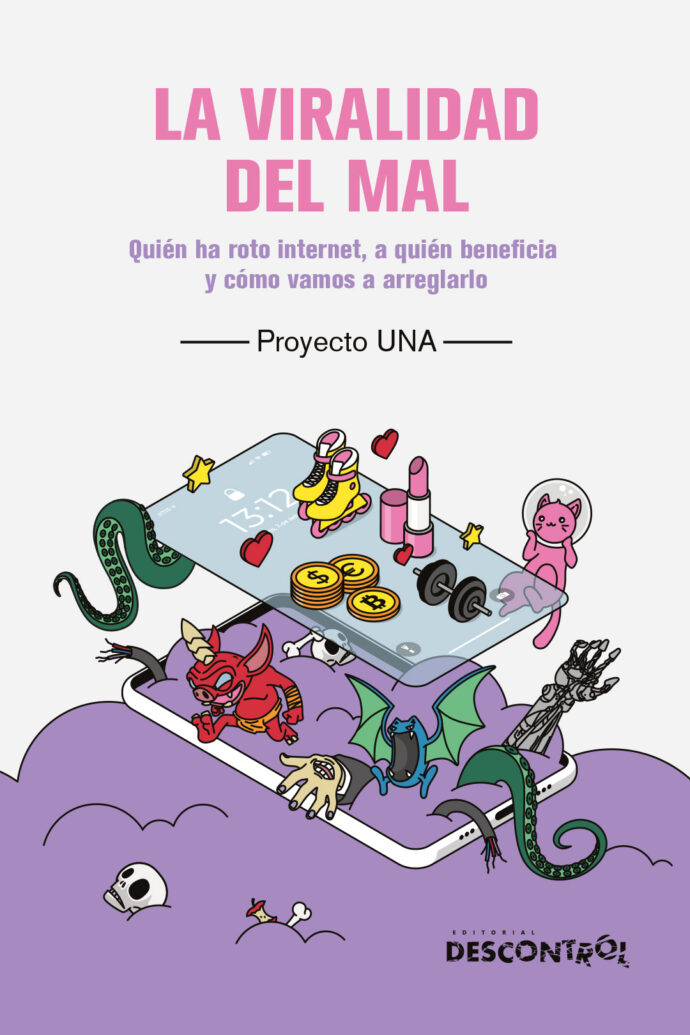
The essay “La viralidad del mal. Quién ha roto internet, a quién beneficia y cómo vamos a arreglarlo”, published by Descontrol Editorial in 2024, offers a detailed analysis of the deterioration of public discourse in the digital sphere and the decisive role played by major tech corporations in this process. Written by the collective Proxecto UNA, the work is situated within a historical context marked by the reconfiguration of the public sphere around social media and the consolidation of what is known as platform capitalism. In this context, companies known as Big Tech have adopted business strategies that, under a guise of algorithmic neutrality, prioritize emotionally charged content in order to maximize user engagement time and, consequently, advertising revenue. The attention economy clearly favors far-right discourse, while content focused on human rights and environmental protection tends to be marginalized.
The research highlights the figure of the so-called “hate monetizers”, actors who generate direct economic profit through the creation and dissemination of confrontational, abusive, or misleading content. The book’s central thesis argues that the architecture of algorithms on platforms such as X, YouTube, or TikTok not only allows but actively promotes the virality of such content over more reflective alternatives. These messages align with the logic of maximizing digital impact and contribute to sidelining proposals centered on the common good. This dynamic creates a funnel of radicalization that particularly benefits global far-right narratives, which effectively exploit these dynamics to normalize positions that would face greater resistance in traditional public debate.
From an economic and geopolitical perspective, the essay is framed within a period of growing tension between democratic states and the de facto power exercised by large platforms. Recent decisions by companies such as Meta and X, including the reduction of content verification programs and the loosening of policies against hate speech, respond primarily to profitability calculations. The attention economy acts as the driving force behind this phenomenon: more confrontational and simplified content generates higher engagement, reinforcing a model in which far-right narratives are especially amplified, while other perspectives are pushed aside.
The impact on the physical world constitutes another central axis of the essay. Proxecto UNA emphasizes that verbal violence in digital spaces does not remain confined to a virtual bubble but rather legitimizes and precedes real-world aggression against vulnerable groups. The book documents the relationship between hate speech targeting the LGTBIQ+ community or migrant populations and the increase in reported hate crimes in the Spanish State. This analysis aligns with reports from FELGTBI+ (Spanish State Federation LGTBI+), which warn of a rise in automated accounts dedicated to defamation and threats against these groups.
Despite its critical diagnosis of the breakdown of the original internet, the book maintains a constructive and forward-looking perspective. The collective Proxecto UNA, operating anonymously (to protect themselves from reprisals, to demonstrate alternative ways of existing online without building a personal brand, and to prioritize collective identity over individualism), proposes practical tools to counter these dynamics. These include the demonetization of harmful content through pressure on advertisers, boycotts of platforms that repeatedly fail to meet democratic standards, and the creation of digital communities grounded in collective care. The work ultimately reaffirms the agency of citizens in promoting content oriented toward the common good against the dominant logic of platform economies.
In conclusion, “La viralidad del mal” emerges as a key essay for understanding the current state of global communication. Combining analytical rigor with an accessible style, Proxecto UNA exposes the mechanisms that have transformed the internet from a space of connection and knowledge into one deeply shaped by corporate economic interests. Its value lies not only in identifying responsibility but also in proposing ways to restore a public debate grounded in reason, empathy, and the common good.
Resources
- Descontrol Editorial (2024). La viralidad del mal. Quién ha roto internet, a quién beneficia y cómo vamos a arreglarlo. https://descontrol.cat/portfolio/la-viralidad-del-mal/
- CTXT (2024). “Es muy grave que presidentes del gobierno publiquen comunicados oficiales en una plataforma privada”. https://ctxt.es/es/20241101/Politica/47912/Diego-Delgado-Proyecto-UNA-la-viralidad-del-mal-comunicados-plataformas-privadas-twitter-bluesky-mastodon.htm
- El Diario (2024). Confrontar el Internet de las Big Tech: “Los monetizadores de odio están ahí más por el negocio que por el odio”. https://www.eldiario.es/era/confrontar-internet-big-tech-monetizadores-negocio-odio_128_11826308.html
- Todo Por Hacer (2025). Entrevista a Proyecto UNA: «Las historias y la creación de mundos alternativos potencia imaginar realidades diferentes a la nuestra». https://www.todoporhacer.org/entrevista-proyecto-una/
- Redes Libertarias (2025). La viralidad del mal. Proyecto UNA. https://redeslibertarias.com/2025/07/24/la-viralidad-del-mal-proyecto-una/
- FELGTBI+ (2025). Estado del odio. Estado LGTBI+ 2025. https://felgtbi.org/wp-content/uploads/2025/05/Estado-LGTBI-Estado-odio-2025.pdf