
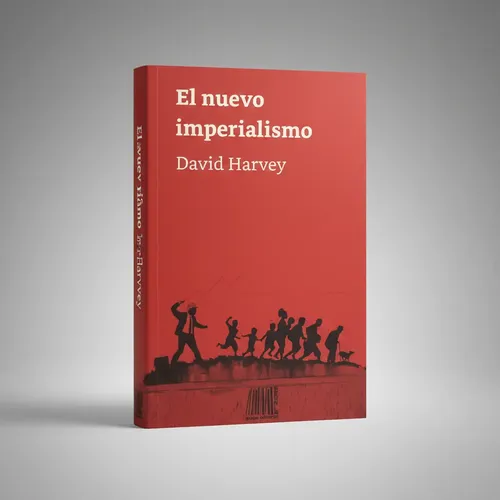
David Harvey’s book The New Imperialism emerged as a direct response to the United States’ invasion of Iraq, with the aim of revealing the true motivations behind that military action beyond the official explanations. From a long-term historical perspective, Harvey places these events within a broader struggle that the United States had begun decades earlier to maintain its global hegemony.
In March 2003, under President George W. Bush, the United States launched the invasion of Iraq. Under international law, this operation was illegal, as it did not have the authorization of the UN Security Council. The official excuse was Iraq’s refusal to dispose of the weapons of mass destruction that, according to the US government, it possessed. However, this allegation was never proven, leaving the military operation without a solid legal justification. Despite this, the United States was never sanctioned for its violation of international law.
In response to these events, Harvey published The New Imperialism that same year. In its pages, he begins by explaining the fundamental interest of the United States in controlling the Middle East, a key region for dominating the global oil industry and flows. Harvey poses an uncomfortable question: “What better means could the United States employ to evade competition and secure its hegemonic position than to control the price, production and distribution of the key economic resource on which its competitors depend? And what better means than the one in which it remains all-powerful, the military? Armies move on oil.” This intervention would be one more of the multiple interventionist actions undertaken by Washington to sustain its predominance. But Harvey does not limit himself to this short-term analysis; he provides a historical overview of US power from its beginnings, identifying its moments of weakness and the responses adopted by the country to overcome them.
It is worth noting that the Bush administration was strongly influenced by the Project for the New American Century, a Washington, D.C.-based think tank which, based on the premise that the 20th century had been the “American century”, sought to maintain US hegemony in every sphere throughout the 21st century. One of the main threats to this hegemony at the beginning of the century was the progressive alliance that was taking shape between Germany, France, Russia and China. In this context, the occupations of Afghanistan (motivated by 9/11) and, later, Iraq provided the United States with a strategic foothold on the Eurasian axis.
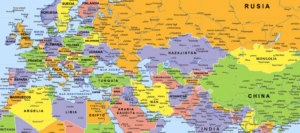
The logic described by Harvey makes it possible to interpret more recent conflicts. The current confrontation with Iran, strategically located between Iraq and Afghanistan, represents, this time, a military rival with a real capacity for defence. Likewise, the US role in the war in Ukraine would form part of a strategy initiated after the collapse of the USSR in 1991 that sought “the geopolitical advance of the United States into the territory of the former USSR, as well as into what had been the Soviet sphere of influence.” This conflict, characterized by the lack of diplomacy and a bellicose stance on the part of the European Union, influenced by NATO, which is dominated by the United States, would serve to break the alliance between the European Union and Russia. As a setback, sanctions against Russia have contributed to strengthening its alliance with other powers, particularly China. This is compounded by the capture of Nicolás Maduro (president of Venezuela) in January 2026 and the increase in actions against Cuba in a clear attempt by the United States to eliminate all anti-imperialist dissent.
The New Imperialism lays the foundations for understanding US foreign policy from a broader perspective. It is a fundamental work for bringing these complex processes to the public, processes that are carried out without the democratic consent of citizens and that serve the objective of maintaining the hegemony of certain elites on the global stage.
Sources:
-
Harvey, D. (2004). El nuevo imperialismo. Editorial: Akal
-
Cobos Fontana, M., (2012). Harvey, David. El Nuevo Imperialismo. Madrid, Akal Ediciones, 2004 (175 p.) ISBN: 8446020661 ISBN-13: 9788446020660. Estudios Avanzados, (18),203-206.[fecha de Consulta 15 de Agosto de 2026]. ISSN: 0718-5022. Recuperado de: https://www.redalyc.org/articulo.oa?id=435541648010
-
El Orden Mundial (2023). La invasión de Irak: causas y consecuencias. https://elordenmundial.com/guerra-irak-invasion-estados-unidos-crisis/
-
PopMatters (2003). The New Imperialism by David Harvey. https://www.popmatters.com/new-imperialism-david-harvey
-
Bellamy Foster, J. (2022). La guerra por encargo de los Estados Unidos en Ucrania. El Trimestre Económico, 89(355), 903–915. Recuperado de: https://www.eltrimestreeconomico.com.mx/index.php/te/article/view/1593/1480
-
Zamora, A. (2021). Política y geopolítica para rebeldes, irreverentes y escépticos. Editorial: Akal