
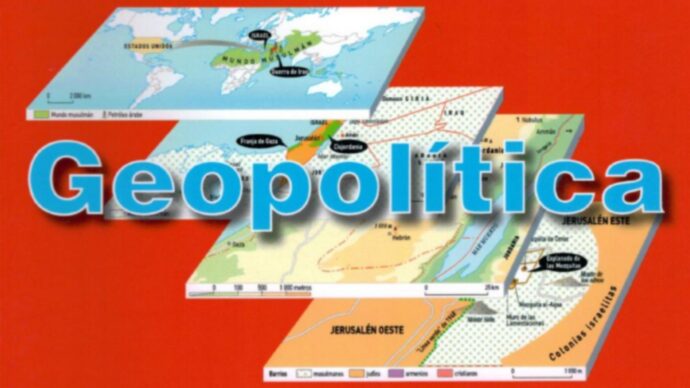
In 2006, the French geographer Yves Lacoste published “Geopolitics. The Long History of the Present”, a work that proposes an innovative reading of international relations through the overlapping of maps and scales of analysis. Lacoste, founder of the journal Hérodote and considered one of the fathers of modern geopolitics, offers in this book a perspective that goes beyond the traditional view of conflicts to place them in their historical and territorial dimension. The work constitutes a fundamental tool for understanding the crossroads of the contemporary world from a standpoint that combines geography, history and political science.
The book structures its analysis around a central idea: the present has a long history that is drawn upon territories. Lacoste proposes moving away from media simplifications to address each conflict or geopolitical tension through the overlapping of multiple maps showing different regions at various scales. In this way, current events are not isolated phenomena but the result of historical processes and complex territorial dynamics dating back centuries. The work invites the reader to exercise “geopolitical reasoning”, a skill that allows deciphering the keys to conflicts through the analysis of relationships between power, space and population.
The production context of the book is particularly relevant. Lacoste writes between the events of Genoa in 2001, when the anti-globalisation summit confronted the Italian police with protesters and brought to the fore discontent with neoliberal globalisation, and the financial crisis of 2008, which shook the foundations of the world economic system. This period of upheaval and questioning of global power structures fostered a reflection on the imbalances of the contemporary world, from the US intervention in Iraq to conflicts in Africa and the rise of new powers such as China. Lacoste’s work thus emerges at a time of uncertainty and of searching for new interpretative frameworks for a world in transformation.
For those interested in the international situation, “Geopolitics. The Long History of the Present” offers a thorough and well-documented analysis of each particular conjuncture from a historical perspective. Lacoste does not limit himself to describing events, but rather explains them through the power relations played out in territories, considering state actors as well as social movements, multinational corporations, and international organisations and agencies. The book thus becomes a guide to navigating the complexity of the globalised world, providing the reader with the keys to understanding the tensions that define the current time.
Lacoste’s work stands out for its didactic character and its abundant use of maps, which accompany the text and allow the territorial dynamics under analysis to be visualised. This commitment to cartographic representation is not anecdotal: for the French geographer, the map is an instrument of power and a fundamental tool of knowledge, capable of revealing relationships and processes that often go unnoticed. The overlapping of different layers of information over the same territory allows the reader to understand how seemingly local conflicts are connected to regional and global dynamics.
Ultimately, “Geopolitics. The Long History of the Present” is a reference work for those who wish to go beyond daily news and understand the deep roots of the conflicts shaping today’s world. Lacoste offers a rigorous and accessible methodology that enables the reader to develop critical thinking about international relations, overcoming stereotypes and simplifications.